
Saye Tomah’s Homecoming after 52 Years “Those that wait upon the Lord shall renew their strength” (Isaiah 40:30).
Through it all God has been my strength, my very present help in times of peace and troubles and he made it possible for me to live to see this day when the LAMCO Family Reunion organization is giving me my flowers while I still have breath. It is also a plus to the Boikai administration for the national recognition as well and thanks to the youth of Liberia who have so much trust and faith in me as their father and mentor.
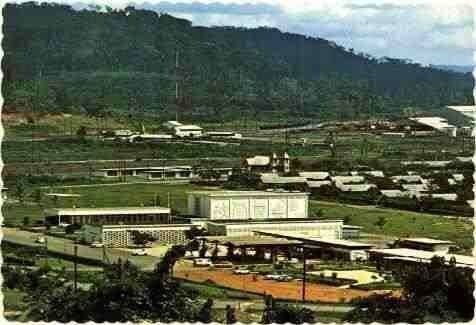
Today, our gathering is about a community that resided in Nimba County and we cannot celebrate LAMCO without celebrating the county and people in whose land we lived, attended school and worked. As for me and my household, we have a unique Nimba story and inheritance that I would like to share with you.
My Nimba Connections and Heritage
My connection with Nimba County is deeply rooted in traditional Liberian history. The people of Nimba and Grand Gedeh Counties have been neighbors and in-laws for centuries, long before the modern Republic of Liberia was established. Through interethnic marriages, we have children born through the unions of Krahn, Mahn, and Dahn parents, such as the Tuazamas, Towehs, etc. And, for the record, my Nimba relatives and friends call me “Saye Tomah Gbaba.”
Here, my name is blended with Mahn, Dahn, and Krahn backgrounds. I am named Saye because I am first born male in my family (even though technically speaking it is a name given to the first born of a woman, not the man). The name “Tomah” I inherited from my father. It was bestowed upon my father at birth more than a century ago by a Dahn chief who was friends with my grandfather named Keh-Gbaba, a descendant of the Nien Dynasty of Krahn kings and descendant of Yarlee-Gbenh, founder of Zwedru City, the capital city of the Krahn ethnic group of Liberia.
According to family history, when my father was born over a century ago, the Dahn chief who lived in Tappita traveled on foot with his entourage for miles, bringing gifts to congratulate my grandfather and to attend the naming ceremony. When the Dahn chief arrived and was warmly welcomed, he told my grandfather, “I name our son Tomah. In our dialect, “Tomah” means “a successor”. When I die, he will take my place.” That’s how my father got his Gio/Dahn name. Over the years, the Krahn people could not pronounce “Tomah” as it is pronounced in the Dahn language. Thus, they ended up mispronouncing Tomah as “Tomoonh”.
Beware of the Falsehoods of Liberian Politicians and Their Divide and Rule Tactics
I know for you young Liberians, you might be wondering, how come a Dahn chief named a Krahn prince with a Dahn name. If the people of Nimba and Grand Gededh are supposed to be “enemies” then how come a Dahn chief traveled hundreds of miles by foot to celebrate the birth of a Krahn prince? If the people of Nimba and Grand Gedeh are archenemies as the Liberian press and politicians portray then why are so many Dahn and Mahn people residing in Grand Gedeh and intermarried even after a so-called bloody civil war that claimed the lives of a quarter million Liberians?
I am sharing this story with you because the story you have been told about the people of Grand Gedeh and Nimba being “enemies” is FALSE. It is a distortion of the truth and it is a “divide and rule” tactic that the True Whig Party government used for more than a century to divide and rule Liberians by putting one ethnic group against the other to maintain power for more than 133 years.
My Childhood Experience as a Resident of Nimba County
I was five years old when my parents relocated to Gbapa, Nimba County during the diamond rush in the late 50s and early 1960s. Gbapa back in the day was a small diamond mining settlement along the way to Yekepa, Cassava Farm and Camp Four and New Yekepa where I staged my first drama, “Life Story of Kekula” 52 years ago.
My parents were engaged in the diamond mining business. My stepfather (Thomas Sackor) worked at a diamond creek in Gbapa and my mother, Princess Gbeh-Nyennonh-Garh Gaye, ran her “cold bowl” shop.
There were no public schools in Gbapa those days, so my parents sent me to live with a Mandingo friend of theirs and a diamond broker named Lassana Kamara who lived in Sanniquillie to attend St. Mary’s Catholic Mission School. That was how I was privileged to see Presidents William V. S. Tubman, Osage Fu Kwame Nkrumah, and Papa Sekou Toure, when they attended the Sanniquillie Conference in 1959!
My Mandingo adopted father (Lassana Kamara) was married to a Mandingo lady named Ma Fanta and another Fula lady whose name I do not recall. He lived right up the hill opposite the Sanniquillie Market before you descend the hill where the Dunbar Pond is and before you go past St. Mary’s campus. My father Lassana Kamara did not have any child at that time so he took me with him everywhere he went to transact his diamond business. We traveled to Bahn and Seclepea and other regions of Nimba that I cannot recall. I even learned how to speak Mandingo at one point in time and I enjoyed the morning breakfast called “monnee”. It is a kind of cereal meal—very nice!
After several years in Gbapa, my parents moved back to Monrovia when I turned nine. The second time around when I returned to Nimba, I was enrolled at Archbishop Carroll High School as a sophomore student in 1972. For three years, I studied under the rigid and disciplinary guidance of English and Irish Christian Brothers, studied Shakespeare, Wordsworth, Rousseau, Emerson, you name it. Suddenly, in my senior year something happened that changed my life forever. I had a vision in which the Lord inspired me to write the “Life Story of Kekula” which today turned out to be a story about myself. What an irony.
“Life Story of Kekula” Starring Bill Ross, III and Rosaline Rogers
As you are aware, Archbishop Carroll High School those days was an all-boys school and so you might wonder how I recruited girls to participate and where did the rehearsals take place. As a young man, I carried myself responsibly. I founded a Christian organization on campus called Creating Friendship in Christ (CFC). I was the Right Hand Brother and Robert Freeman, Jr. was Left Hand Brother and Bill Ross, Henrique Zobon Scott, Harrison Yaidoo, Harry Tucker were Honorable Brothers.
We approached the parents and assured them that their daughters would be safe when they came on Carroll High Campus in Grassfield and I made sure those hot Carroll High Cobras did not mess around my girls. Mr. Sirleaf, a famous, loving, kind bus driver brought the girls on campus for rehearsals and took them back home safely.
On the day when we performed “Life Story of Kekula” in October 1974, the Open Door Theatre was full to capacity! Among some of the prominent LAMCO personalities who attended the debut performance of “Libe Story of Kekula were Honorable Charles B. Roberts, Administrative Manager, Honorable John G. Rancy, Superintendent of Schools, Dr. Varsay Sirleaf, Magistrate James Harris, Sr., and my surrogate mother, Mrs. Dolly McCritty Massaquoi.
Members of the cast included Robert Freeman, Jr., Caleb Domah, Henrique Scott, Winston Conteh, Joseph Zig Collins, Jr., Stephen Daniels, Jr., the Cole Sisters, Roseline Rogers, Geleh Massaquoi, Bill Ross, III, Kerper Dwanyen, Leon Padmore, Patrick Forforh, Edsel Deshields, Joseph E. Deshields, Charles Samuels, Africanus Richardson, Patrick Ajavon, Harrison Yaidoo, Harry Nagbe Tucker, Jarloth Wolo, Jr., Allen Cassell, Samuel Brownell, Jr., etc. There were members of the international community in the house as well.
Interestingly, the elders who watched the show could not believe what they saw. Honorable Charles B. Roberts laughed his heart out in the balcony and when the show was over, he came down to congratulate me. He gave me my first pay check as a playwright, Five Hundred Untied States Dollars! Mommy Dolly wrote me a note congratulating me and foreseeing my becoming “Liberia’s Shakespeare”, and Magistrate Harris, blessed me and urged me to “keep up the good work.”
“Life Story of Kekula” was a documentary about national integration and unity, but it was a comedy and through the comic scenes I presented a narrative about creating national unity through interethnic marriage.
Today, I am a living witness to what I preached 52 years ago. Princess Ariminta, my wife, is a member of the Porte Family from Crozierville and I am a descendant of Krahn kings from Grand Gedeh County. My wife is the new “Sussie” and I am new “Kekula” and our intermarriage is blessed with five children and fifteen grandchildren, some of whom are present today.
Our children and all Liberians born of interethnic marriages and their offspring constitute what I would term the “core lineage” of the new Liberian society. 52 years ago, our society was segregated on tribal lines or class system but today we are a more blended and integrated society.
A Big ‘Thank You’ to My Nimba Parents, Guardians and Friends
My success in Nimba County was not attributed to only my schoolmates, professors, and my parents. There were many families that opened the doors of their homes to me as a student whose parents were from Grand Gedeh. My Mandingo father Lassana Kamara, Ma Fanta, Mommy Dolly McCritty Massaquoi, my other parents included Mr. and Mrs. Stephen Daniels, Sr., Mr. and Mrs. Joseph Zig Collins, Sr., Mr. and Mrs. Cassell, Mr. and Mrs. David Dwanyen, Mr. and Mrs. Gabriel Farngalo, my friends Deborah Cranshaw, Ophelia Dolo, Margaret Dookie, and my brothers James Zota (aka Dennis), Patrick Suah, Patrick Forforh, Caleb Domah, George Farngalo, George Dahn, Nathaniel Biah, George Jacobs, Prince Tebbs, and LAMCO Family Union Organization.
What a blessing to be in your midst!
I love you.
Rabbi Prince “Saye Tomah” Gbaba, Sr., Ed. D.
August 8, 2026